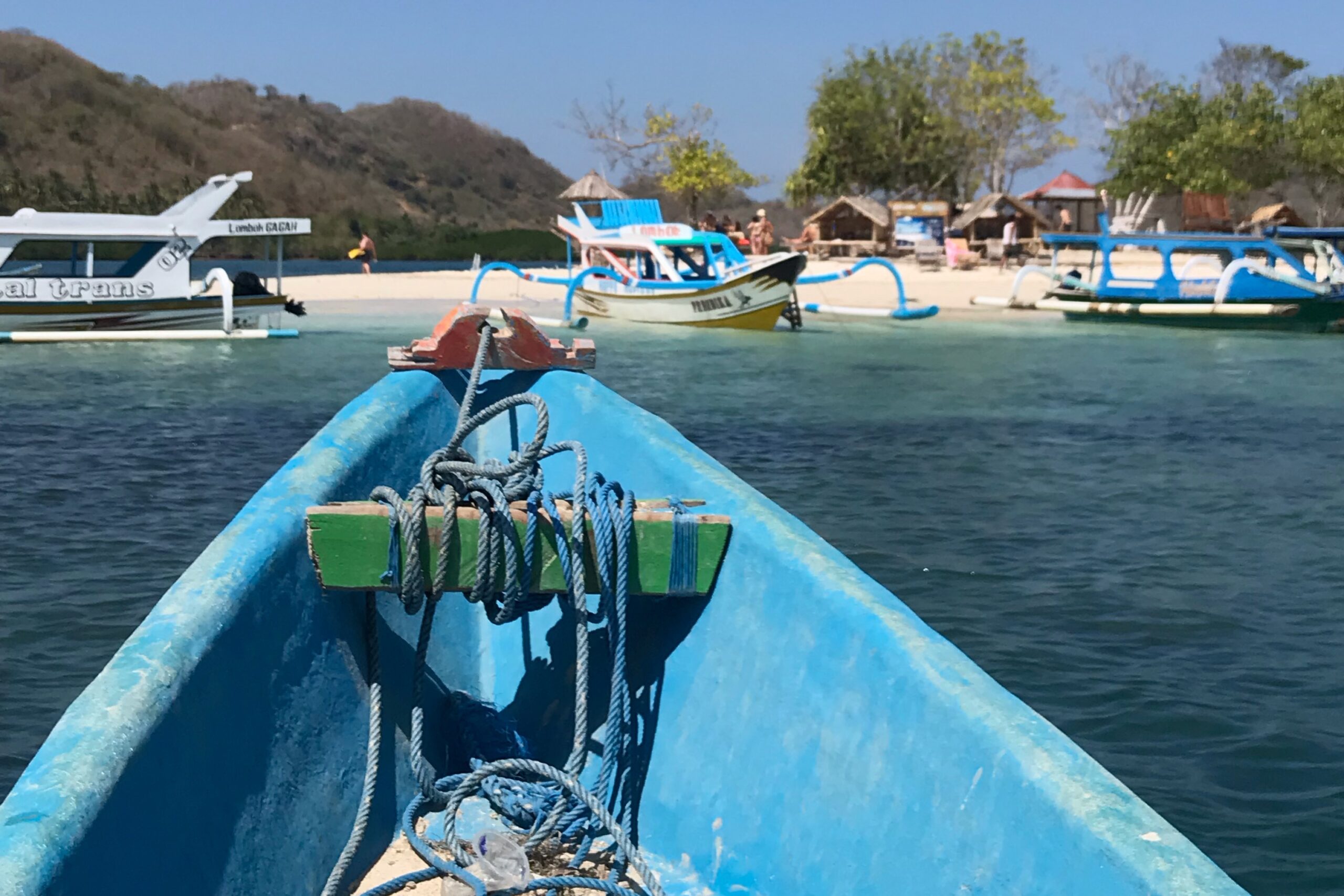
Laid-back Lombok: Coconut, Coffee and Coral Reefs
You can’t help but relax amid the laid-back island life, food and culture of Lombok.
Lombok, the lesser-known island neighbour of Bali, has a calming effect. Though there is a hum of motorbikes and construction, of roosters and cows, and music floats through the air in the evening, it is somehow serene.
The relaxed mindset of the locals rubs off. People work enough to live, but not too much more. They rise early and take midday naps. They talk with friends in the afternoon. They prioritize eating together and throw big celebrations for holidays.
There are electronics, but nature’s television has more channels here. The swaying coconut trees, the glorious pink and orange sunset, the milky white sand, the fish darting in all colours of the rainbow. Nature’s radio does too: the chirping birds and lizards, the muezzin call and the lapping waves.
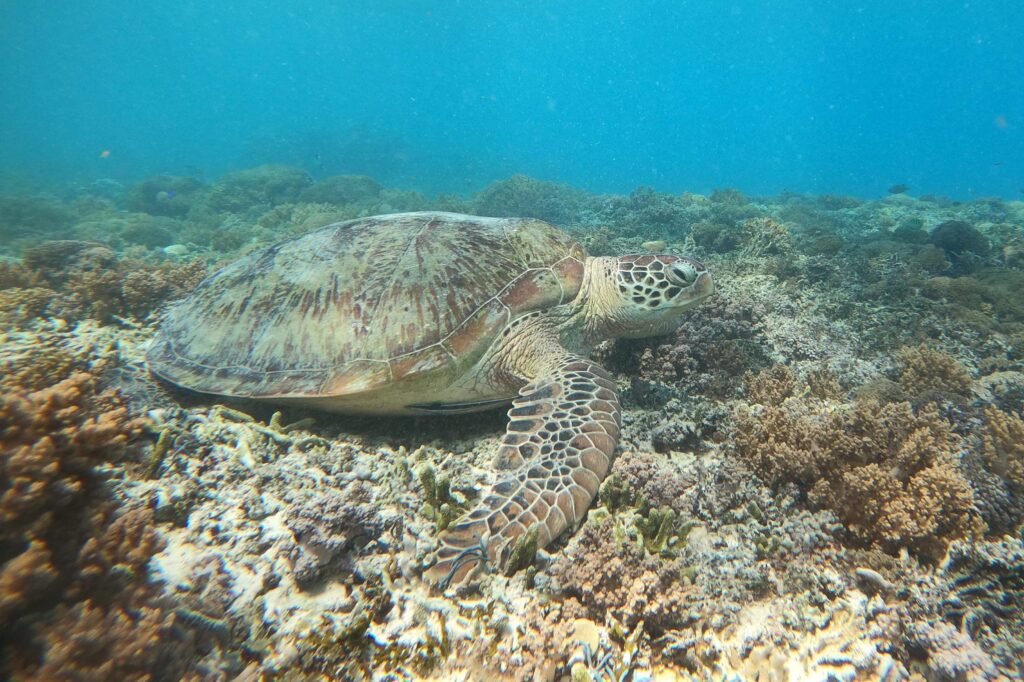
Snorkeling with Sea Turtles
The sea turtles seem to adopt the same relaxed approach. A large green turtle flanked by cleaning fish rests in the coral reef next to Gili Meno in the same spot every day, almost oblivious to the tourists in flippers and snorkels who circle it. More turtles paddle slowly off the edge of the reef, down into the deep blue of the Meno slope, or up to the sparkling surface, their brown and green backs and white underbellies shining.
Lombok is surrounded by many gili – islands – and coral reefs teeming with marine life. Gili Nanggu and Gili Kedis, islands off the South-West coast of Lombok, are a snorkeler’s paradise, where sea turtles, fluorescent fish and coral beds thrive. Project Hiu takes snorkeling and dive trips to more islands east of Lombok on repurposed shark fishing vessels.
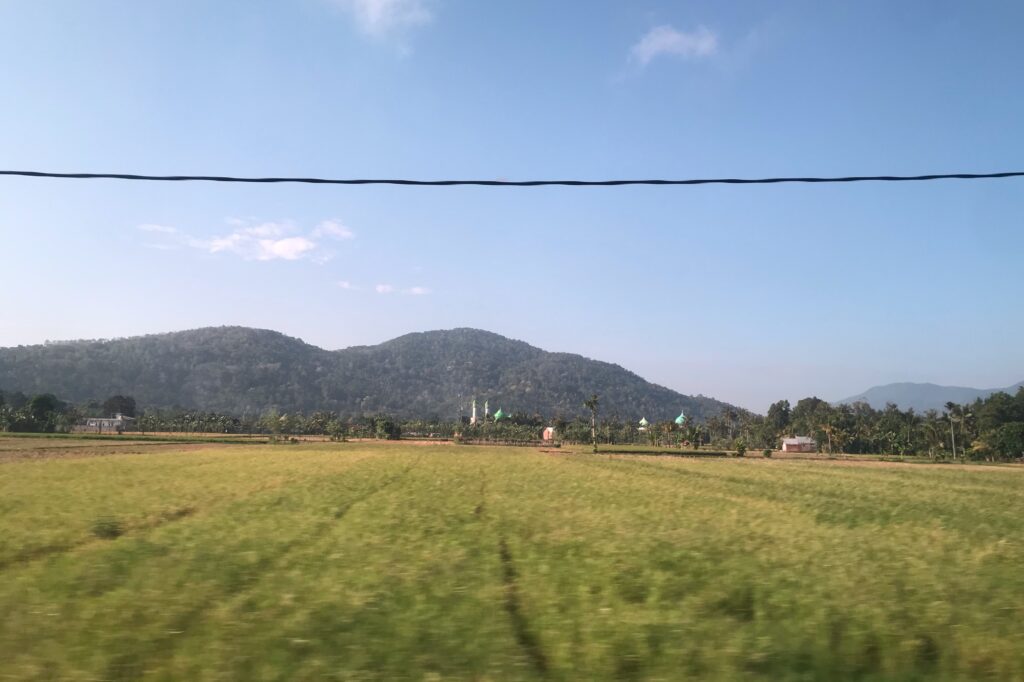
The Land of 1000 Mosques
Lombok is a predominantly Muslim island, like most of Indonesia. A few times a day, and for longer on special occasions, the muezzin call rings between the trees. It is a beautiful sound, especially in the late afternoon when the sun is turning everything golden. There are so many mosques that the island’s nickname is the ‘Land of 1000 Mosques’.
The lush slopes of Mount Rinjani, the second-highest volcano in Indonesia, rise high in the north. The flatter area between the mountain and the sea in the South is an expanse of green rice paddies and melon farms.
Our driver, Galih, happens to mention that his family has one of the many melon stalls on the main road. We stop for three small watermelons and they throw in a fourth with kind smiles. They export the big watermelons to Bali and Java, and the small ones are sold at the market.
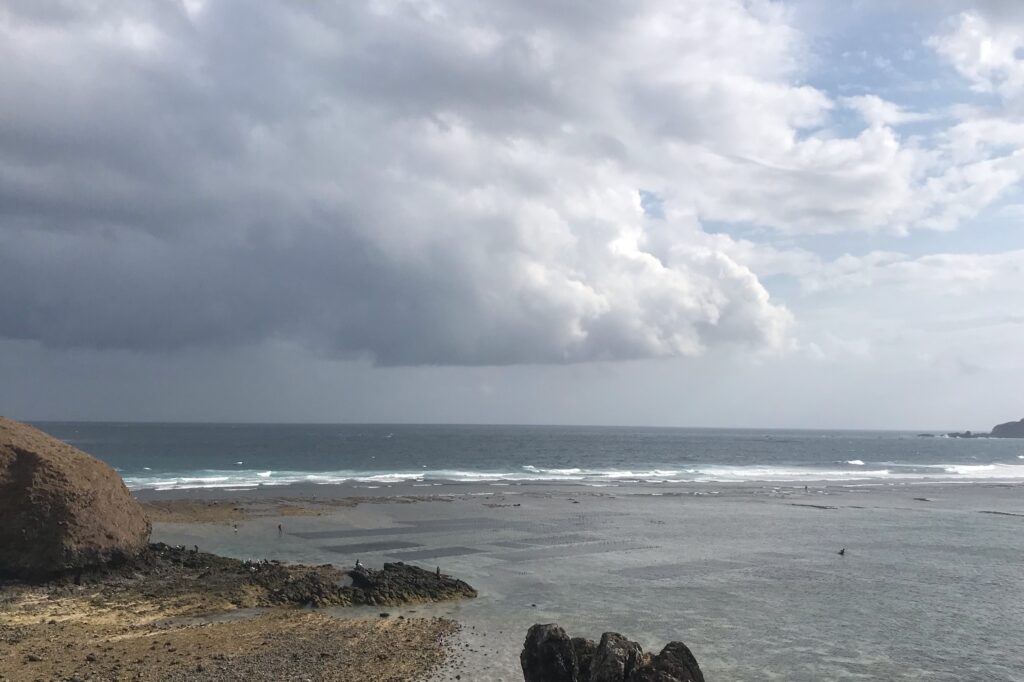
Coastal Life
On a Sunday afternoon at Seger Reef, the tide goes out, way out, until sandy seagrass banks emerge. The local men and boys wade out further and further to gather seaweed from the farms by the point.
The women and girls wade too, but close to shore, gathering near the rocks so as not to get their beautiful long garments wet. Most of the local women are over on the beach with the smaller children, under the shade of a bamboo structure in front of the drinks stalls, laughing and talking while keeping one eye on their boys diving in the big waves.
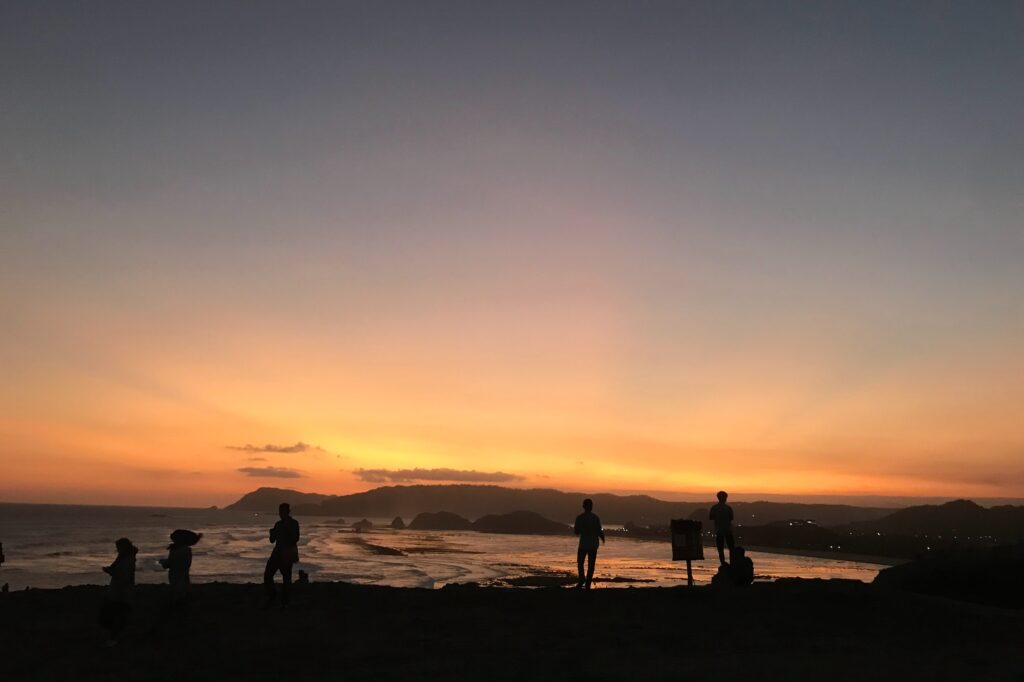
Beautiful Lombok Sunsets
Lombok has nearly four million inhabitants, which is not always visible in the small houses and huts, but soon becomes apparent at dusk when families and friends emerge on motorbikes to watch the sunset. Two or three to a motorbike, they head for the hills or the beach, the women’s kerudung flapping in the wind. Families play in the water as the sky turns pink, dark orange and red.
On top of the round dry hill called Bukit Seger, the ground is littered with coconut shells and the grass is almost completely worn off. It has a bird’s eye view of the Pertamina MotoGP circuit. It is also one of the best sunset vantage points closest to Kuta, and at 4 pm, a group of couples is already climbing to get a good spot.
In the evening, the smoke from fires wafts through the street, mixed with smoke from fish grills and frying oil. Young people gather on the main street and joke with one another, calling to their acquaintances as they pass by.
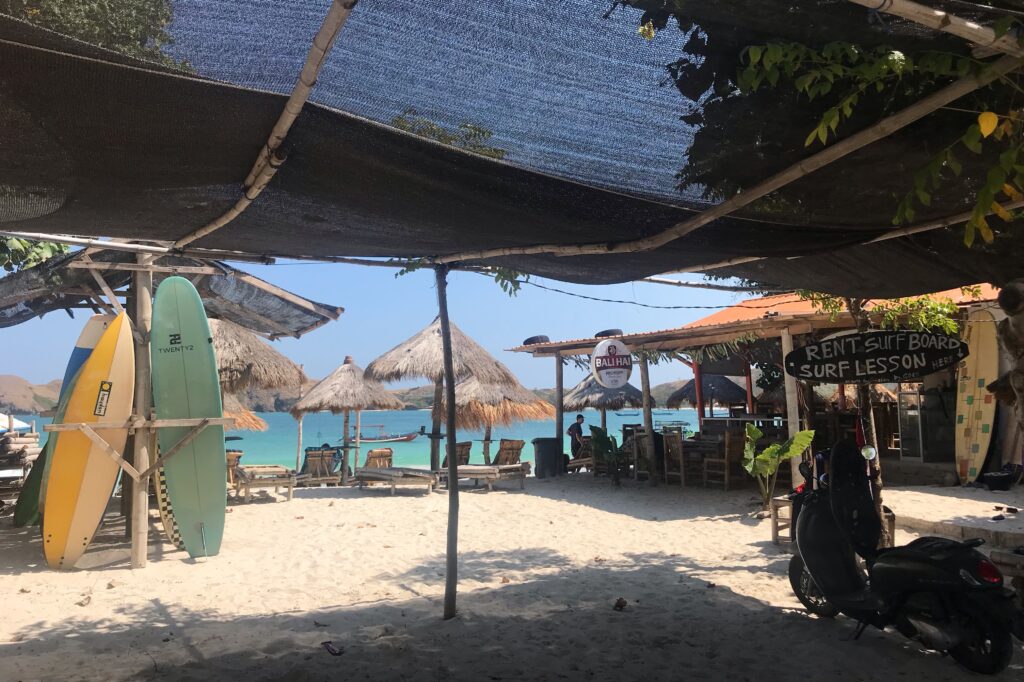
Local Coffee, White Sand and Fresh Fish
One morning, I venture out into Kuta town. It is still quiet, but the cafés are full, and further up the street, the market is humming with produce sellers. I enjoy a delicious Indonesian coffee in a big wooden chair under the fragrant frangipani trees.
Later, I read in a batik-covered sun lounger at Tanjung Aan beach. If you’re not into jumping onto an outrigger and surfing the reef, the fresh coconuts and leafy umbrellas are just asking for a good read to dive into. Beauty is a Wound by Eka Kurniawan is an Indonesian written epic, set in the aftermath of the Dutch colonial rule and made up of fantastic tales of local families expertly woven together.
In the evening, we choose a fresh parrotfish to grill at Fish Tails Warung. The fish is incredibly fresh and delicious, served with fluffy rice, water spinach and beans in ginger and garlic. There are plenty of options for vegetarians and vegans too, with fresh vegetables, tempeh, tofu and coconut-milk-based delights on offer.
Making Coconut Oil and Learning Sasak Customs
The local people of Lombok are called the Sasak. Lulu, a French native, is married to a local Sasak man and in 2020, started Ninē-Ninē Lombok working with local women. The project started with weaving, then moved into upcycling of bendang, the local garments.
At the evening’s coconut, sambal and coffee workshop, we eat local fried treats with coconut and condensed milk and sit in a circle of big wooden chairs as Lulu tells us as much as she can about the local customs. She especially focuses on middle-aged women who are currently the main holders of traditional culture. The project now employs around 30 women, prioritizing those who cannot find work elsewhere.
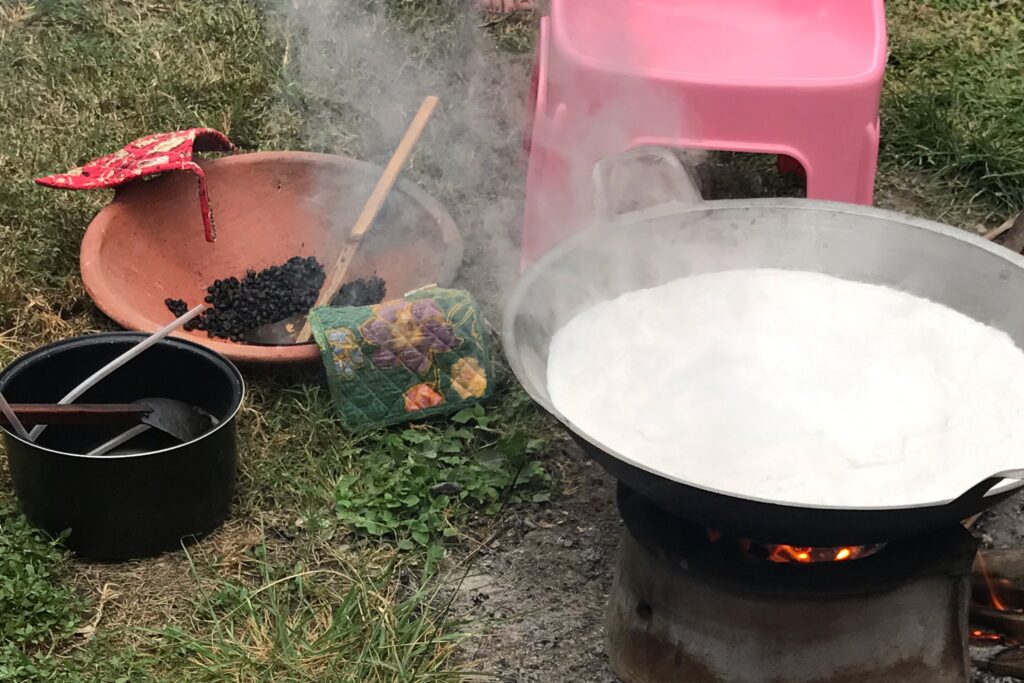
We make coconut oil together, squeezing the milk out of the shredded flesh and then heating it over the fire until the oil bubbles to the surface, leaving behind the delicious “poop” when strained. The “poop” is a delicacy shared between the women in a village according to the work put in. Lulu’s colleague Sani expertly shells a coconut with a curved blade, showing us how to keep the precious water inside.
Coconut is an important resource, and every part of the plant is used, from the leaves woven into shelter and flooring to the flesh pressed for oil and milk and the water consumed for belly health and hydration.
We make sambal around a well-worn wooden table, crushing chili, garlic, galangal, turmeric and onion together in well-used stone mortars, some making tomato sambal and some a curry paste for our dinner. Food that requires a staged process or large quantities is always prepared as a community like this, and work is done in stations, depending on age and physical condition.
We learn the techniques for roasting local coffee, and we try the coffee together. Lulu tells us that it is important here to make coconut oil and to roast coffee over an outdoor fire, as the power in the coffee and coconut plants should be released before the finished products enter the kitchen. We learn about the importance of coffee in marriage and courtship. This is just one of the many aspects of the black magic that underpins the social fabric of life here.
Wedding Processions in Black and Gold
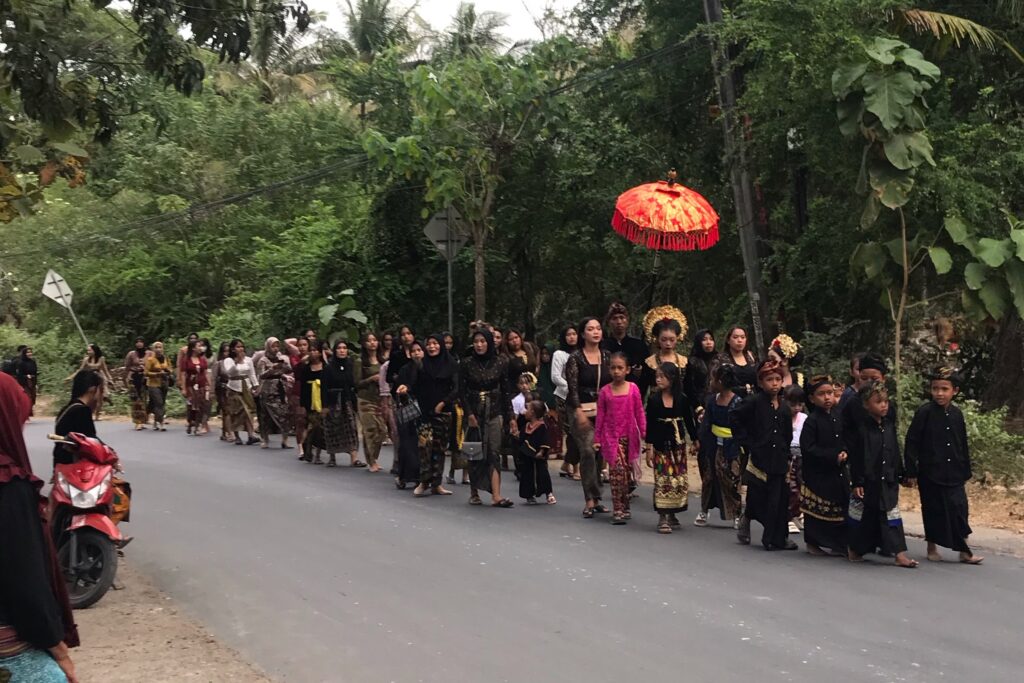
We hear drums and music approaching – a wedding procession is coming right past the garden. The bride appears in black and gold, shaded by a tall umbrella with glinting ornaments. She inches up the slope of the road in impossibly high heels and she is not allowed to smile.
The children in the front wave at us proudly and say hello. The procession is on its way to the bride’s village where her family is waiting, to receive her as a new bride before she goes to live in her husband’s village.
The drummers and cymbalists stop every so often in a series of motions. Their outfits are beautiful – sarongs in deep purples and reds and jackets in sand or teal. The bridal party wears black with gold accents and the guests have shining silk-patterned dresses. They slowly pass by until the drums and cymbals echo in the valley and the motorbikes resume their buzz.
Weaving Stories over Generations
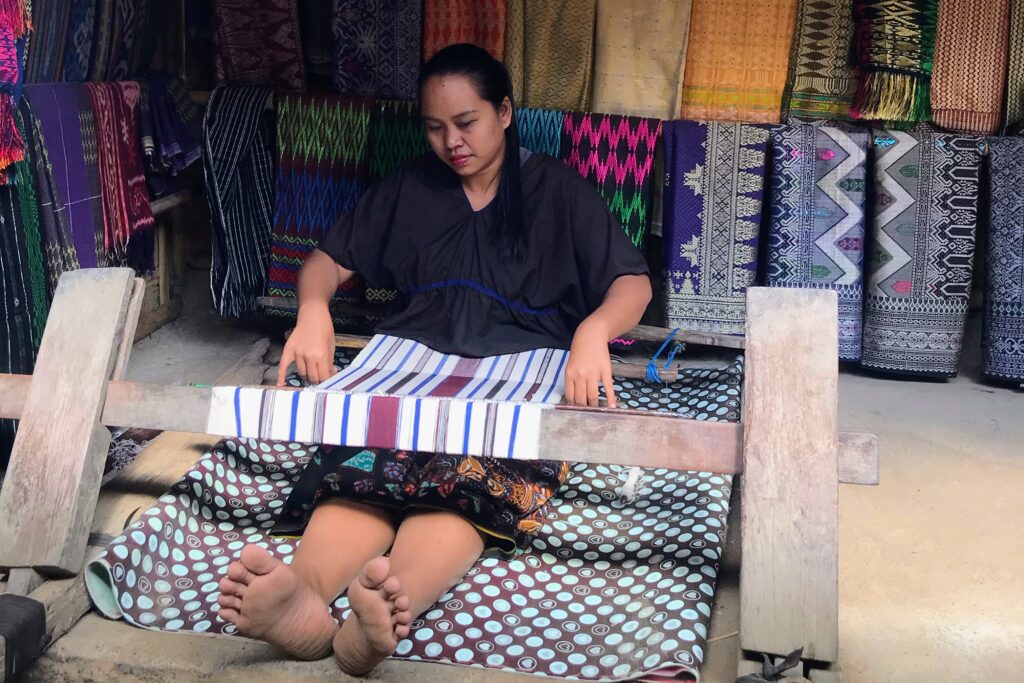
The weavers of Ninē-Ninē are part of a long Sasak tradition spanning many generations. In the villages of Sade and Sukarara, we watch as women work with a multitude of threads and hear the clack of the smooth piece of hardwood that sets each new thread in place. A woman cannot marry until she has learned to weave, and she is taught by her mother, grandmother and the women of the village. Looms are handed down through generations, and each weaver develops her own style and techniques. Each colour and pattern has a deep meaning. Black is important in ceremonies, and it is no coincidence that the dye is often created using roasted coffee.
The spirit of Lombok lies in these traditions: the coastal life, the woven stories, the community preparations and decisions, the black magic of coconut and coffee, the drums of a wedding ceremony. It is strong, and it is calming.
If You Go
This story has been published in Go World Travel Magazine. Read it here.